Table of Contents
ToggleLos Angeles enjoys year-round sunshine and mild winters, but that doesn’t mean your roof gets a free pass. Intense UV exposure, occasional heavy rains, wind, and thermal stress from temperature swings all take their toll on roofing materials over time. Whether you’re dealing with a slow leak discovered during a storm or visible shingle damage from the summer sun, understanding roof repair needs in Southern California is essential to protecting your home’s structural integrity and preventing costly water damage. This guide covers the most common LA roof issues, when to tackle repairs yourself versus calling a professional, and how to find a trustworthy contractor in a competitive market.
Key Takeaways
- Los Angeles roof repair needs are driven by intense UV exposure, occasional heavy rains, and thermal cycling that accelerate material breakdown faster than in cooler climates.
- Annual or biennial roof inspections should be standard practice in LA, especially after major storms and before the winter rainy season (October–December), to catch curling shingles, granule loss, and sealant failure early.
- Water leaks often travel far from their source before appearing inside your home, so tracking down leaks requires patience and sometimes professional equipment like thermal imaging to prevent costly structural damage.
- Minor cosmetic repairs like replacing a few shingles or sealing vents are safe DIY projects, but extensive damage, structural issues, flashing failure, and active leaks demand professional help to avoid voiding warranties.
- When hiring a Los Angeles roof repair contractor, always request three written estimates, verify their C-39 California roofing license, confirm insurance coverage, and prioritize licensed, insured, well-reviewed companies over the cheapest bid.
- Los Angeles roof repair costs range from $150–$400 for minor shingle work to $8,000–$20,000+ for full replacements, making early detection and maintenance the most cost-effective protection for your home’s structural integrity.
Why Los Angeles Homes Need Regular Roof Maintenance
A Los Angeles roof faces a unique mix of environmental stressors that accelerate wear compared to cooler climates. The relentless sun breaks down asphalt shingles and sealants faster than in shaded regions, UV rays literally cook roofing materials over years. Winter rains, though infrequent, come hard and fast, testing seals and flashing. Thermal cycling, the daily temperature swings between daytime and nighttime, causes shingles to expand and contract, weakening fasteners and sealants.
Unless your roof is relatively new, annual or biennial inspections should be standard practice. Look for signs of premature aging: curling shingles, granule loss (appearing as gritty residue in gutters), lifted or cracked shingles, and visible sealant failure around vents or flashing. Catching small problems early prevents them from spreading into structural damage that requires full sections, or even a complete replacement, down the road. Most roofers recommend inspections after major storms and before the winter rainy season (October–December in LA).
The Most Common Roof Problems in Southern California
Shingle Damage and Weather-Related Wear
Asphalt shingles, the standard for residential roofing in LA, typically last 15–20 years in Southern California’s climate but often show age earlier due to UV exposure. Curling shingles, where edges turn up or cup inward, indicate the shingle’s core is breaking down: this usually means replacement is within a year or two. Missing or cracked shingles expose underlayment and the wood sheathing beneath, inviting water damage.
Hail is rare in Los Angeles proper, but strong Santa Ana winds (November–April) can lift shingles or tear them loose, especially if nailing is poor or the roof is nearing end-of-life. Check for punctures, torn seams, or missing tabs after windy events. Branches and debris can also cause localized damage.
Leaks and Water Damage Prevention
Winter and spring rains expose every weak point in a roof system. Water doesn’t always leak directly where you see a stain: it travels along sheathing, framing, or insulation before appearing inside walls or ceilings, often feet away from the actual entry point. This is why tracking down leaks requires patience and sometimes professional equipment like thermal imaging.
Common leak sources include deteriorated flashing (the metal trim around vents, chimneys, and roof edges), cracked or missing shingles, gaps where additions meet the main roof, and improperly sealed penetrations. Water pooling in valleys or near low points accelerates damage. Interior signs, ceiling stains, mold, soft drywall, or a musty smell in the attic, demand immediate inspection and repair. The longer water sits, the more structural framing, insulation, and sheathing can rot, turning a $500 repair into a $5,000+ project.
When to DIY vs. When to Call a Professional
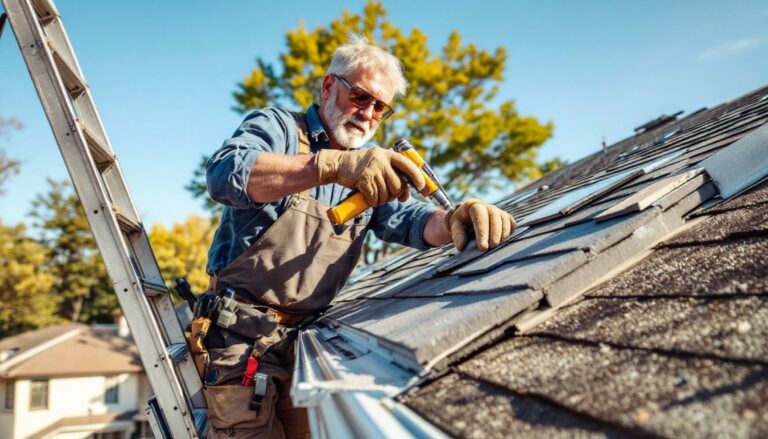
Cosmetic or minor repairs are fair game for confident DIYers: replacing a few missing shingles, sealing a vent boot, or clearing moss and debris. You’ll need roofing cement (also called asphalt roof sealant), replacement shingles matching your existing roof, a utility knife, a pry bar, and roofing nails. Safety gear, non-slip roof shoes, a harness, and goggles, are non-negotiable: roof falls account for thousands of injuries annually.
But, any of these warrant professional help: extensive shingle damage across multiple areas, suspected structural damage (rotted sheathing, sagging roof line), flashing failure, active leaks you can’t locate, or repairs near electrical lines or skylights. If you’re uncomfortable working at height or feel unsure about the scope, hire a pro. A bad DIY roof repair can void manufacturer warranties and create liability if water damage spreads to your neighbor’s property.
Also consider your roof’s age and condition: if it’s 15+ years old or shows widespread wear, a pro assessment might reveal that repair is temporary triage and replacement is the better long-term choice. LA’s permit requirements for roofing work vary by city and repair scope, some repairs need permits, others don’t. Check with your local building department if work is substantial.
Choosing the Right Roof Repair Contractor in LA
Los Angeles has no shortage of roofing companies, but quality and integrity vary widely. Start by asking friends, neighbors, or your real estate agent for referrals, word-of-mouth carries weight. Cross-check candidates on platforms like HomeAdvisor for verified reviews, ratings, and completed project portfolios.
When you narrow your choices, always request at least three written estimates. A reputable contractor will visit your roof in person, photograph damage, and provide an itemized quote specifying materials, labor, and warranty terms. Avoid companies that quote over the phone or pressure you into same-day decisions. Verify current licensing with the California Department of Consumer Affairs: LA roofing contractors must hold a C-39 (roofing) license. Confirm current liability insurance and workers’ compensation, you don’t want to be liable if a contractor is injured on your property.
Ask how long the company has been in business, whether they stand behind their work with a warranty (labor and materials), and if they handle permitting. Pricing alone shouldn’t drive your choice: a cheap estimate from a fly-by-night operation often leads to shoddy work and disputes. Allow 2–3 weeks for scheduling: reputable crews book out, which is a good sign.
Roof Repair Costs and What to Expect
Roof repair costs in Los Angeles depend on scope, materials, and access. Replacing a few shingles runs $150–$400 including labor. Repairing or replacing flashing around a vent or chimney costs $200–$600. Patching a leak or resealing joints typically falls in the $300–$800 range, plus diagnosis time if the source isn’t obvious.
Larger jobs, replacing a section of underlayment, fixing rot in sheathing, or addressing multiple areas of damage, can escalate to $1,500–$5,000. A full roof replacement (when repair isn’t viable) averages $8,000–$20,000+ depending on roof size, pitch, material choice (asphalt, metal, tile), and underlying structural repairs. These figures vary by neighborhood and material costs: coastal areas and high-income zones command premium pricing.
Obtain detailed estimates and ask about payment schedules. Many contractors require a deposit (25–50%) upfront, with balance due upon completion. Get everything in writing: scope of work, timeline, materials, warranty, and cleanup responsibility. Research typical pricing in your area through resources like ImproveNet’s cost guides or local roofing association databases to avoid overpaying. Remember that cheap doesn’t mean value: a slightly higher estimate from a licensed, insured, well-reviewed contractor is often the smarter investment than the lowest bid.