Table of Contents
ToggleA small leak. A loose shingle. A clogged gutter, these are the kinds of roof issues that catch most homeowners off guard, usually at the worst possible time. You don’t necessarily need a full roof replacement or even a major overhaul, but waiting too long can turn a minor fix into serious structural damage and costly water intrusion. Whether you’re wondering if you can handle the repair yourself or looking for a qualified contractor in your area, knowing the difference between cosmetic roof work and structural concerns will save you time, money, and headaches. This guide breaks down common minor roof repairs, walks you through spotting problems early, and helps you decide whether to DIY or call in the pros.
Key Takeaways
- Early detection of roof damage like water stains, missing shingles, or flashing gaps prevents costly structural damage—address issues immediately rather than waiting for visible leaks to spread.
- Minor roof repair near me can often be handled as DIY projects if you have proper safety equipment and the damage is cosmetic or preventive, such as single shingle replacement or gutter cleaning.
- When hiring a professional roofer, always request three written estimates, verify licensing and insurance, get references, and avoid contractors requesting full upfront payment.
- Structural roof issues like sagging sections, rotted decking, and valley leaks require a licensed contractor and permit; DIY repairs can void warranties and violate building codes.
- Budget $50–$400 for single shingle replacement, $150–$500 for flashing repairs, and $100–$300 for gutter cleaning, but factor in regional variation and prioritize quality contractors over lowest bids.
Common Minor Roof Repairs and When You Need Help
Most homeowners run into a handful of recurring roof issues. Missing or damaged shingles are the most common, a single shingle can split, curl, or blow away, exposing the underlayment beneath. Flashing failures around chimneys, vents, and skylights are another frequent culprit: when flashing rusts or gaps open up, water seeps into the home. Clogged gutters and downspouts trap debris and cause water backup, which can rot fascia boards and compromise the roof deck over time.
Small punctures from branches, debris, or low-slope roof foot traffic are usually fixable on the spot. Loose nails and fasteners are simple tightening jobs, assuming you can safely access the roof. Granule loss on asphalt shingles (you’ll notice them washing into gutters) signals aging but isn’t always urgent unless it’s widespread.
Here’s the honest part: if you’re dealing with structural damage like sagging sections, rotted decking, or water stains that suggest active leaks inside the attic, that’s structural work. Similarly, valley leaks (where two roof slopes meet) and issues near load-bearing walls need a professional eye. Building codes vary by jurisdiction, but most structural roof work requires a permit and a licensed contractor. If your roof is under warranty, DIY repairs can void coverage, check your documentation first.
Age matters too. If your roof is 15+ years old (asphalt shingles typically last 15–20 years), a minor patch might tide you over for a season or two, but a full replacement could be on the horizon. A roofer can assess remaining life expectancy.
Signs Your Roof Needs Immediate Attention
Don’t wait for a ceiling stain to start spreading before you act. Early detection prevents thousands in secondary damage. Interior water stains on ceiling drywall or attic framing are a red flag, they mean water has already breached the roof and is working its way in. If you see mold, wet insulation, or soft spots in the attic, that’s a sign the leak has been active for weeks or longer.
Outside, look for shingles that are visibly curled, cracked, or missing entirely. Walk around your home after a windstorm or heavy rain and scan the gutters for granules or shingle fragments. Check flashing around vents and chimneys for rust, separation, or gaps filled with old caulk that’s cracking.
A sagging roofline is more serious, it suggests either water-logged decking or structural settling and warrants a professional inspection right away. Similarly, daylight visible from the attic (especially near edges or vents) means the roof covering has failed. In winter, ice dams (thick ridges of ice at the eave) indicate poor attic ventilation or insulation, but the real damage happens when meltwater backs up under shingles and leaks inside.
Don’t ignore soft spots when walking on the roof, they indicate rot. And if you smell mildew or notice an unusual odor in your attic, check for hidden moisture. Many homeowners don’t realize they have a slow leak until damage is extensive.
Finding Qualified Roof Repair Services in Your Area
Searching “minor roof repair near me” will flood you with options, but not all contractors are created equal. Start by asking neighbors, friends, and family who they’ve used, personal referrals are gold. Online review platforms like Angi and HomeAdvisor let you filter by location, read detailed feedback, and cross-check pricing.
When vetting contractors, ask for:
• At least three written estimates (not over the phone, they should inspect in person).
• Proof of liability insurance and workers’ compensation (non-negotiable: you’re liable if someone gets hurt on your property).
• License verification through your state’s licensing board.
• References from recent jobs, ideally from the past year.
• A clear timeline and material specifications in the quote.
Avoid contractors who ask for full payment upfront or cash-only arrangements. Legitimate businesses invoice after completion. A low bid doesn’t mean a good deal, it often signals corner-cutting. A fair estimate accounts for quality materials, labor, and local market conditions.
What to Expect From Local Repair Professionals
A qualified roofer will start with a thorough inspection, typically from ground level with binoculars and then on the roof itself if needed. They’ll identify the root cause of the leak, not just the symptom. For instance, a ceiling stain below a vent doesn’t always mean the vent is failing, it could be improperly flashed or the flashing could be separating from settling.
The estimate should itemize materials (brand and grade of shingles, flashing type, sealants), labor costs, and any prep work like debris removal or gutter cleaning. Quality contractors also specify the fastening method (nails vs. adhesive), roof ventilation considerations, and whether existing shingles will be removed or shingled over (which affects longevity and proper installation).
Reputable roofers carry their own insurance, provide a workmanship warranty (typically 3–5 years), and follow manufacturer installation guidelines. Many also offer a warranty on materials that extends 10+ years depending on shingle grade. Ask what’s covered, workmanship warranty doesn’t always cover water damage from improper flashing, for example.
DIY Minor Repairs You Can Handle Yourself
Not all roof work requires hiring out. If you’re comfortable working at heights, have the right safety gear, and the repair is cosmetic or preventive, you can save money and headaches.
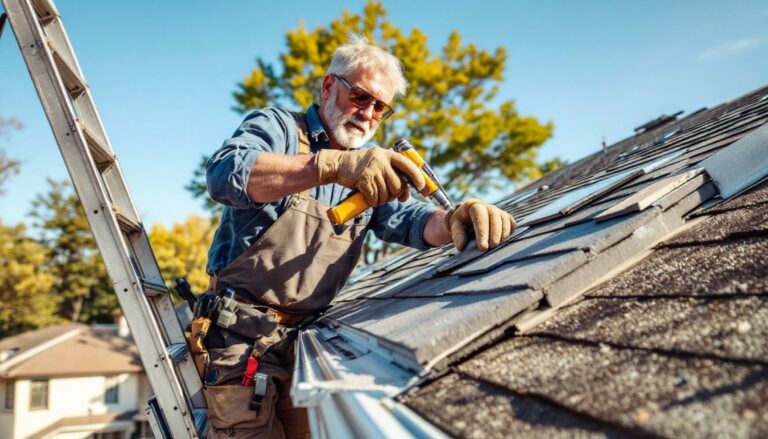
Safety first: Wear a roof safety harness or work with someone spotting from the ground. Use a stable ladder rated for your weight. Never work on a wet or icy roof, wait for dry conditions. Wear rubber-soled boots, work gloves, and eye protection. If you’re removing old shingles or disturbing dusty debris, a dust mask or respirator is smart.
Replacing a single shingle:
- Locate the damaged shingle and the nails holding it in place (usually 4 nails per shingle, plus nails from the shingle above).
- Use a flat pry bar to gently lift nails. Work slowly, tearing the surrounding shingles makes more work.
- Slide the old shingle out and insert the replacement, aligning it flush with adjacent shingles.
- Drive 4 nails through the nail slots, and seal the nail heads with roofing cement if they’re exposed.
- Apply a dab of roofing cement under the overlapping shingle above to keep it from lifting in wind.
Clearing gutters and downspouts:
- Use a gutter scoop or small shovel to remove leaves and debris.
- Rinse with a garden hose to flush out fine sediment.
- Check that water flows freely from downspouts and away from the foundation.
- If a downspout is clogged, use a plumbing snake or pressure washer (carefully, high pressure damages aluminum gutters).
Caulking and resealing flashing:
- Remove old caulk or sealant using a caulk remover or utility knife.
- Clean the area thoroughly with a brush and let it dry completely.
- Apply a polyurethane roofing sealant or silicone-based caulk rated for outdoor use and temperature cycling.
- Smooth with a caulk tool or gloved finger for a professional appearance.
If shingles are brittle, nails won’t hold, or the decay is widespread, stop and call a pro. Patching a symptom without fixing the underlying cause just delays a bigger bill.
Cost Estimates for Minor Roof Repairs
Minor roof repair costs vary widely by geography, material type, and complexity. A single shingle replacement typically runs $50–$150 if you’re doing it yourself (factoring in travel to buy the right shingle match) or $200–$400 if hiring a contractor (they charge a service call minimum). Flashing repair or resealing around a vent or chimney ranges from $150–$500 depending on access difficulty and whether underlying damage requires decking repairs.
Gutter cleaning is among the cheapest fixes: $100–$300 for a typical single-story home, or free if you’re comfortable on a ladder. A full gutter replacement costs significantly more, $1,500–$3,000+ depending on linear footage and whether downspouts or fascia boards need replacement.
These figures don’t include travel, overhead, or contractor licensing, so expect regional variation. Urban areas and regions with higher labor costs will run higher. Material costs also fluctuate: asphalt shingles range from budget-friendly 3-tab versions to premium architectural styles at double the price. Flashing materials range from aluminum (cheaper, less durable) to lead-lined copper (pricey but lasts 50+ years).
Use cost estimators on sites like Bob Vila and HomeAdvisor to get ballpark figures for your area, but remember that the lowest estimate isn’t always the best value. A contractor offering a comprehensive warranty and transparent materials list is worth 10–15% more than a cut-rate quote.
Conclusion
Minor roof repairs don’t need to derail your budget or your peace of mind. Catching problems early, whether through regular inspections or swift action after spotting damage, keeps costs manageable and prevents cascading water damage. Know your limits: DIY works for simple, accessible fixes like shingle replacement or gutter cleaning, but structural leaks, widespread damage, and flashing failures demand a licensed professional. When you do hire someone, vet carefully, get multiple estimates, and prioritize contractors with proof of insurance and solid references. Your roof protects everything beneath it: treating it right now saves thousands down the road.