Table of Contents
ToggleWhen your commercial or industrial roof starts leaking, the clock starts ticking. Water damage spreads fast, compromising insulation, structural integrity, and your bottom line. Unlike residential roofs, industrial installations come with unique materials, load requirements, and compliance issues that demand specialized expertise. Finding the right industrial roof repair contractor near you isn’t just about price, it’s about getting someone who understands commercial systems, reads building codes, and can mobilize quickly. This guide walks you through identifying qualified local specialists, understanding what to expect during inspections, and asking the right questions before you sign a contract.
Key Takeaways
- Industrial roof repair near you requires specialized expertise in commercial systems, materials, and building code compliance—not just general contracting experience.
- Before hiring, verify contractor licensing, insurance (workers’ comp and liability), and BBB ratings, then request at least three references from similar industrial projects.
- A thorough inspection should take 1-2 hours and include detailed documentation of roof materials, damage type, drainage issues, and a precise, itemized estimate covering labor, materials, and permits.
- Common industrial roof problems like membrane punctures, flashing failures, and pooling require specific repair protocols tailored to your roof type (TPO, EPDM, PVC, or metal systems).
- Ask upfront about warranty terms, permit responsibility, timeline flexibility, and how change orders will be handled if unexpected issues surface during the repair.
- The lowest price rarely delivers the best value—investing time in vetting contractors prevents costly future failures and ensures code compliance.
Understanding Industrial Roof Repair Needs
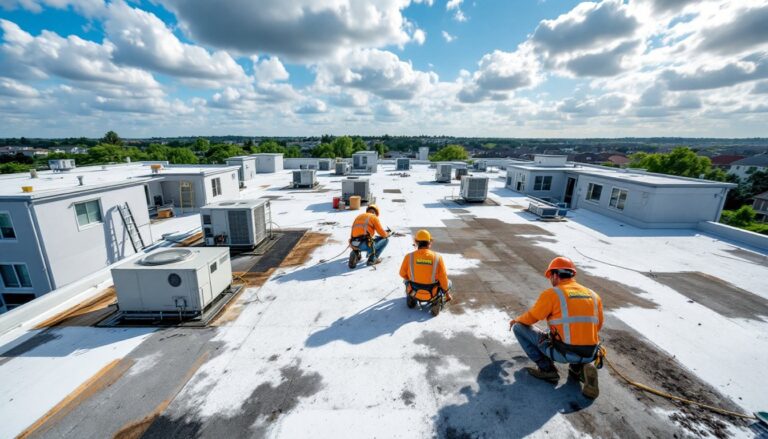
Industrial roofs face different stressors than residential ones. Heavy equipment, HVAC systems, solar installations, and consistent foot traffic create wear patterns that standard roofing doesn’t address. Common systems include flat membrane roofs (TPO, EPDM, PVC), metal roofing, and hybrid setups that blend multiple materials.
Repair urgency depends on what you’re dealing with. A small membrane puncture might wait a few days: a active leak above machinery or electrical systems needs same-day attention. Before calling contractors, assess whether you’re facing cosmetic damage (worn flashing, minor pooling) or structural concerns (sagging sections, corrosion, compromised seams).
Industrial roofs also require attention to code compliance. Local building departments enforce standards around fire ratings, ventilation, load capacity, and safety access. Permits are often mandatory for anything beyond emergency patches, so budget time and cost for inspections. Knowing whether your repair is cosmetic or structural helps you communicate clearly with contractors and avoid surprises.
How to Find Qualified Roof Repair Contractors Locally
Start with online directories that specialize in contractor matching. Platforms like hiring commercial roof repair professionals filter by service area, customer ratings, and specialization. General resources like HomeAdvisor and ImproveNet let you request quotes from multiple contractors at once, which saves time and gives you pricing benchmarks.
Check the Better Business Bureau (BBB) for each prospect, look for A+ ratings, complaint history, and how responsive they are to negative reviews. Trade groups like the National Roofing Contractors Association (NRCA) maintain membership directories: contractors who invest in certifications and standards tend to be more reliable.
Don’t skip local references. Ask about companies similar to yours (by industry or facility size), because someone experienced with textile mill roofs might handle your warehouse differently than a contractor who specializes in office parks. Request at least three references and call them.
Researching Local Contractors and Reading Reviews
Online reviews tell you what to expect, but read carefully. A single 2-star review about poor communication matters less than a pattern of complaints about the same issue. Watch for reviews mentioning things like timeline adherence, cleanup, and whether they honor warranties.
Check their insurance and licensing. Ask for proof of workers’ compensation insurance, general liability, and a current contractor’s license (requirements vary by state and municipality). A contractor refusing to provide this information is a red flag, period.
What to Expect During the Inspection and Estimate Process
A thorough inspection takes time, typically 1–2 hours for an industrial roof. The contractor should climb on the roof with a camera, take photos of problem areas, check membrane integrity, examine seams and flashing, and identify drainage issues. They’ll note ponding (standing water), cracks, exposed substrate, and any signs of interior leaks.
Good contractors measure the affected area precisely and note material type. They’ll ask about the roof’s age, installation date, previous repairs, and maintenance history. This data matters: a 20-year-old EPDM roof has different remaining life than a 5-year-old one, affecting repair vs. replacement recommendations.
The estimate should itemize labor, materials, equipment rental, and timeline. Watch out for vague pricing like “roof repair: $3,000.” You want specifics: membrane patches, replacement flashing, labor hours, equipment mobilization. Ask whether they’re factoring in permits, inspections, and potential contingencies (surprises discovered once work starts).
Reputable contractors will discuss warranty terms upfront. Will they guarantee the membrane patch for 5 years? Does the roof system have a manufacturer’s warranty that repairs might affect? Get it in writing.
Common Industrial Roof Problems and Solutions
Membrane punctures and tears are the most frequent issue. Small holes get patched with compatible membrane material (adhesive or heat-welded, depending on the system). Larger damage or multiple failures might warrant stripping and replacing a section. Cost varies: a single patch can run $200–$500: section replacement easily hits $2,000–$5,000 depending on area and material.
Flashing failures occur where the roof meets walls, vents, or equipment. Worn sealant, corrosion, or improper installation lets water sneak beneath the membrane. Reflashing involves removing old material, inspecting the substrate, and installing new metal flashing with fresh sealant. It’s labor-intensive but critical.
Pooling and drainage issues prevent water from running off, leading to standing water that degrades membranes. Solutions range from adding crickets (small roof slopes) or tapered insulation to relocating downspouts. Sometimes it’s a clogged gutter, cheap fix. Other times, the roof structure has settled, requiring structural shoring.
HVAC and equipment penetrations create vulnerability if flashing isn’t maintained. Contractors should inspect the base, reseal joints, and confirm the equipment isn’t vibrating loose. Industrial equipment vibration can crack seals over time.
Seam separation on membrane roofs indicates adhesive breakdown or thermal stress. Technicians reactivate heat-welded seams or re-adhere sections with appropriate adhesives. Material matters: TPO, EPDM, and PVC each have different repair protocols.
Questions to Ask Before Hiring a Roof Repair Specialist
-
Are you licensed, insured, and bonded? Ask for proof. Workers’ comp is non-negotiable for safety and liability.
-
How long have you worked with industrial systems like mine? Experience with your roof type, metal, TPO, EPDM, or hybrid, matters. Don’t settle for a residential roofer dabbling in commercial work.
-
Will this repair require permits, and who handles them? You don’t want surprises. The contractor should manage permitting or make clear it’s your responsibility.
-
What warranty do you provide, and does it void the manufacturer’s coverage? Get specifics. A 5-year workmanship warranty on patches is standard: some offer longer on full replacements.
-
How do you handle changes or issues discovered during the job? Once they’re on the roof, surprises happen (rotted decking, undersized substrate). Ask how they’ll communicate and quote change orders.
-
Can you provide three recent references with similar projects? Call them. Ask about timeline adherence, quality, and whether the crew cleaned up properly.
-
What’s your timeline, and how will you minimize downtime for my operation? Industrial facilities can’t always shut down. Ask if they work nights, weekends, or in phases.
-
Do you pull permits and pass inspections, or do I coordinate with the building department? Clarify who’s responsible. Licensed contractors typically handle it: unlicensed ones usually won’t be allowed to.
Conclusion
Finding a qualified industrial roof repair contractor near you boils down to doing your assignments upfront. Vet candidates through multiple channels, verify insurance and licensing, and demand detailed estimates. Ask direct questions about experience, warranties, and timelines. The cheapest quote rarely delivers the best value, you’re buying reliability, code compliance, and peace of mind. A small upfront investment in vetting prevents costly repairs later.