Table of Contents
ToggleStone-coated steel roofing has become a popular choice for homeowners seeking durability and aesthetic appeal. These composite panels combine the strength of steel with a protective stone coating, offering excellent weather resistance and a long lifespan when properly maintained. But, like any roofing material, stone-coated steel isn’t immune to damage. Understanding how to identify problems early and knowing when you can tackle repairs yourself versus calling a professional can save money and prevent costly water damage. This guide walks you through assessment, repair techniques, and maintenance strategies to keep your stone-coated steel roof in top shape.
Key Takeaways
- Stone-coated steel roof repair requires understanding the composite system of steel substrate, primer, and stone coating to address damage correctly and prevent water infiltration.
- Early identification of rust, dents, punctures, and corrosion at seams and penetrations can save thousands in repair costs and prevent structural water damage.
- DIY repairs for minor rust and small punctures under 1/2 inch are achievable with proper safety precautions, correct materials, and thorough surface preparation.
- Annual inspections, fastener maintenance, gutter cleaning, and branch trimming are simple preventative actions that extend your stone-coated steel roof’s 40–70 year lifespan.
- Professional roofers should handle widespread corrosion, multiple punctures, hail damage across large areas, or structural concerns that exceed DIY scope.
- Flashing sealant around vents and chimneys requires reapplication every 5–10 years and is one of the most cost-effective preventative maintenance tasks available to homeowners.
Understanding Stone-Coated Steel Roofing Systems
Stone-coated steel roofing consists of a base steel substrate, typically 26 to 29 gauge, topped with an acrylic primer and then layers of crushed stone aggregate held in place by a polyester topcoat. This layered construction is what gives the material its distinctive appearance, resembling traditional shingles or tiles, while maintaining the structural benefits of steel.
The steel core provides exceptional strength and wind resistance, often rated for winds exceeding 120 mph. The stone coating protects the steel from UV damage and provides the finished color and texture. This combination gives homeowners a long-lasting product: most stone-coated steel roofs last 40 to 70 years with proper care.
Because the material is composite, repair requirements differ from asphalt shingles or metal panels. You’re not just patching a surface: you’re working with a bonded system where the stone coating, primer, and steel all play a role in performance. Knowing this helps you understand why certain damage matters and how to approach fixes.
Common Stone-Coated Steel Roof Damage and When to Repair
Rust and Corrosion Damage
Rust typically appears at cuts, fasteners, or areas where the stone coating has been damaged and the steel is exposed. You might notice orange or reddish discoloration along seams, around roof penetrations, or where branches have scraped the surface. Early-stage rust can be arrested if caught in time: advanced rust may require panel replacement.
Corrosion accelerates in coastal environments or areas with high salt content in the air. Even in inland regions, poor drainage or standing water can trigger rust. Inspect roof penetrations (vents, chimneys, flashing) carefully: these are prime corrosion points.
Dents, Punctures, and Impact Damage
Stone-coated steel can dent from impact, hail, falling branches, foot traffic during installation or repairs. Small dents under 1/4 inch with intact stone coating rarely require repair. Larger dents or those with exposed steel need attention before moisture gets underneath.
Punctures are more serious. If the steel substrate is pierced, water will find its way in. Even a small hole acts like a funnel, directing moisture into the insulation and sheathing below. Check your attic after severe weather: water stains on rafters or insulation are red flags. Most punctures of 1/2 inch or smaller can be sealed: larger damage typically requires panel replacement. Minor roof damage from impacts can develop into major problems without prompt intervention, this is where honest assessment saves headaches.
Step-by-Step Repair Process for Homeowners
Before starting any repair, prioritize safety. Wear slip-resistant boots, a safety harness rated for roof work, and tie off to a secure anchor point. Even experienced DIYers slip on metal roofing, the stone coating can feel grippy underfoot, but it loses traction when wet or humid.
Materials you’ll need: roofing sealant rated for metal (polyurethane or silicone-based), metal roofing patch kit (available at most home centers), fine-grit sandpaper (80 to 120 grit), wire brush or rotary tool with wire wheel, metal primer, roofing paint matching your existing color, and disposable gloves.
For minor rust or small erosion spots:
- Use a wire brush or rotary wire wheel to remove loose rust and scale. Work until you reach solid steel: this may take several minutes.
- Sand the affected area and a 2-inch border around it with 80-grit sandpaper to improve adhesion.
- Clean away all dust with a damp cloth and let dry completely.
- Apply a thin coat of metal primer rated for rusty surfaces, following the product instructions for curing time.
- Once primer cures, apply roofing paint in two thin coats, allowing drying time between coats.
- Monitor the repair monthly. If rust returns, the problem may be deeper, consider professional assessment.
For small punctures or holes:
- Clean the area thoroughly with the wire brush and sandpaper, extending 3 to 4 inches beyond the damage.
- Apply roofing sealant around the puncture perimeter.
- Press a metal patch kit (typically aluminum-backed with adhesive and sealant) over the hole, pressing firmly for 30 seconds.
- Seal the patch edges with additional roofing sealant: some kits include topcoat paint to blend the repair.
- Check the area after the first rain to confirm the seal held.
These repairs work best for cosmetic issues or minor surface damage. Don’t underestimate prep work, a repair that fails usually fails because the substrate wasn’t clean or dry when the sealant was applied. Stone-coated steel roofing systems benefit from the same diligence required for any precision outdoor work.
Preventative Maintenance to Extend Roof Life
Preventative maintenance is the single most effective way to avoid costly repairs. A simple annual inspection, ideally in late fall or early spring, can catch small issues before they escalate. Here’s what to look for:
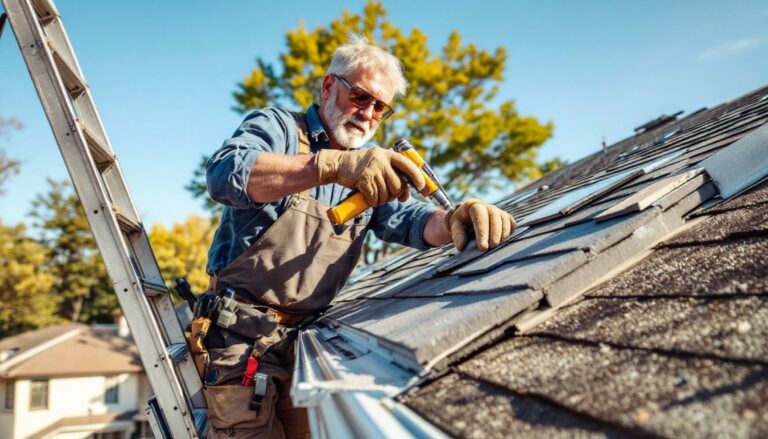
Check fasteners and seams for any sign of corrosion or loose fastener heads. Over time, fasteners can back out due to thermal cycling (expansion and contraction with temperature swings). A cordless screwdriver or drill makes it easy to tighten them. Use the correct fastener type for your roofing system: most stone-coated steel systems specify stainless steel or galvanized fasteners rated for your climate zone.
Clear gutters and downspouts of debris at least twice a year. Clogged gutters hold water against fascia and soffits, promoting rust. You don’t need expensive gutter guards: a simple strainer basket in each downspout opening keeps leaves out.
Trim branches that hang over the roof. Overhanging branches drop debris, create shade that traps moisture, and scrape the stone coating during wind. A 10-foot clearance is ideal.
Inspect flashing around penetrations, vents, chimneys, skylights. These are the most common leak points. Flashing sealant degrades over time and needs reapplication every 5 to 10 years. This is one of the easiest preventative tasks and often prevents expensive interior water damage. Minor maintenance like this, guided by resources such as Today’s Homeowner, keeps problems manageable and your roof warranty intact.
When to Call a Professional Roofer
Some damage exceeds DIY scope. Call a licensed roofer if you encounter:
Large areas of rust or corrosion, particularly around seams or affecting multiple panels. This suggests an underlying issue (poor ventilation, standing water) that a professional can diagnose and fix properly.
Multiple punctures or hail damage across a significant portion of the roof. While a single small hole is manageable, widespread impact damage often warrants panel replacement. The cost-benefit math typically favors professional repair or replacement rather than patching dozens of spots.
Sagging or structural concerns. If the roof decking shows sag or the roof appears uneven, there may be structural damage or inadequate support. This requires professional assessment before any cosmetic repair.
Permits or insurance claims. Some jurisdictions require roofing permits for repairs above a certain dollar amount or for work on roof structures. Your homeowner’s insurance may also require professional installation for claims to be valid. Check local codes and your policy before starting.
Budget guidance varies by region and damage type, but resources like HomeAdvisor’s metal roof repair cost guide and Angi’s roofing reviews offer realistic estimates for your area. Getting multiple quotes from licensed roofers (look for those with at least 10 years of stone-coated steel experience) helps you avoid overpaying for straightforward fixes, and protects you if the job proves more complex than it initially appears.